Guides › Signed, inscribed, bookplate or facsimile signature
Signed, inscribed, bookplate or facsimile signature: how to tell
A signature can add more to a book’s value than anything else about it, but not every signature in a book is an autograph. Some are printed or stamped into every copy (a facsimile signature), some are on a label stuck in later (a signed bookplate) or on a separate sheet bound in (tipped in), and some come with a message to someone (an inscription). Five checks, each illustrated, tell them apart; the first one settles most books in a minute.
The five checks
- Ink or print: real ink sits on the page and varies; a facsimile is flat and printed.
- Where is it: on the page, on a label stuck in, or on a sheet bound in.
- Just a name, or a message: signed vs inscribed.
- Is it on every copy? A facsimile is; a signature is unique to the copy.
- Can you trust it: provenance, known examples, the red flags.
1. Ink or print?
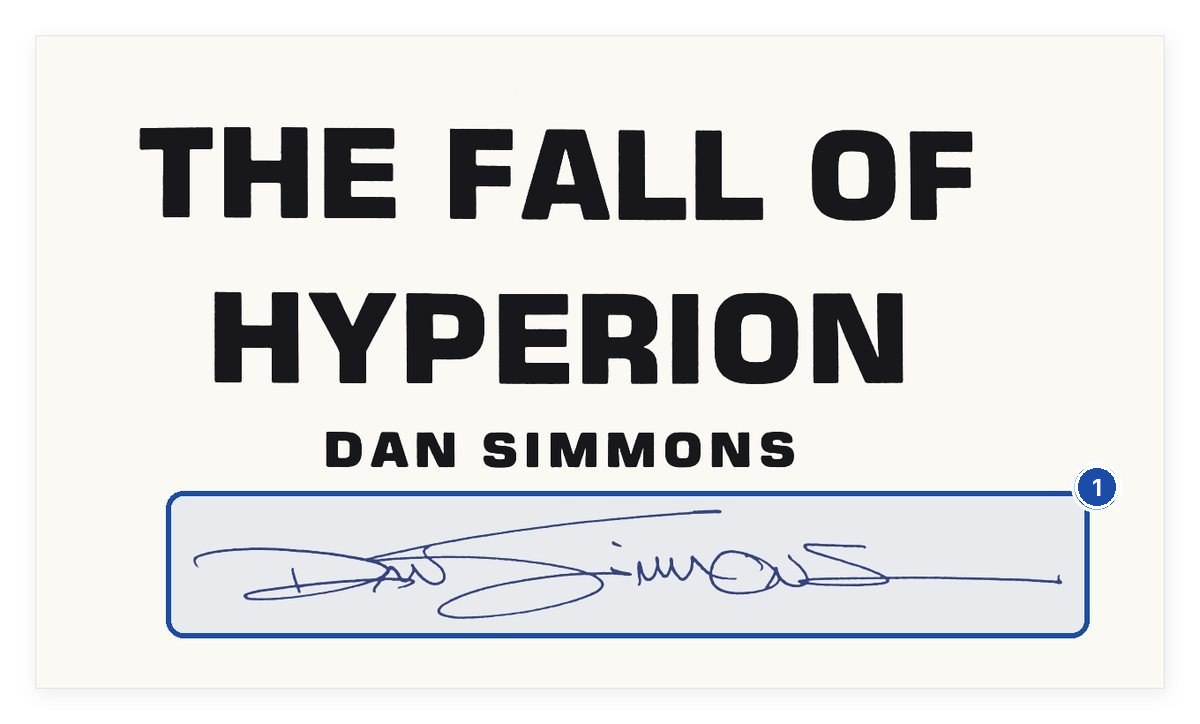
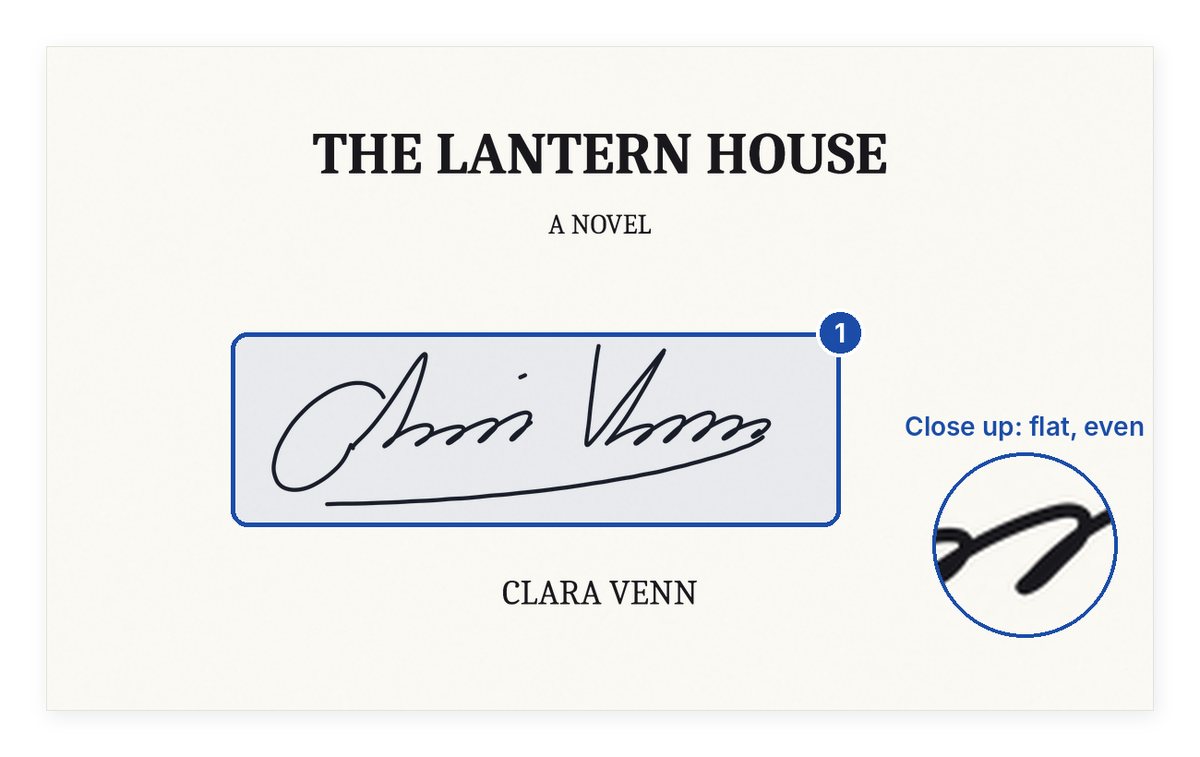
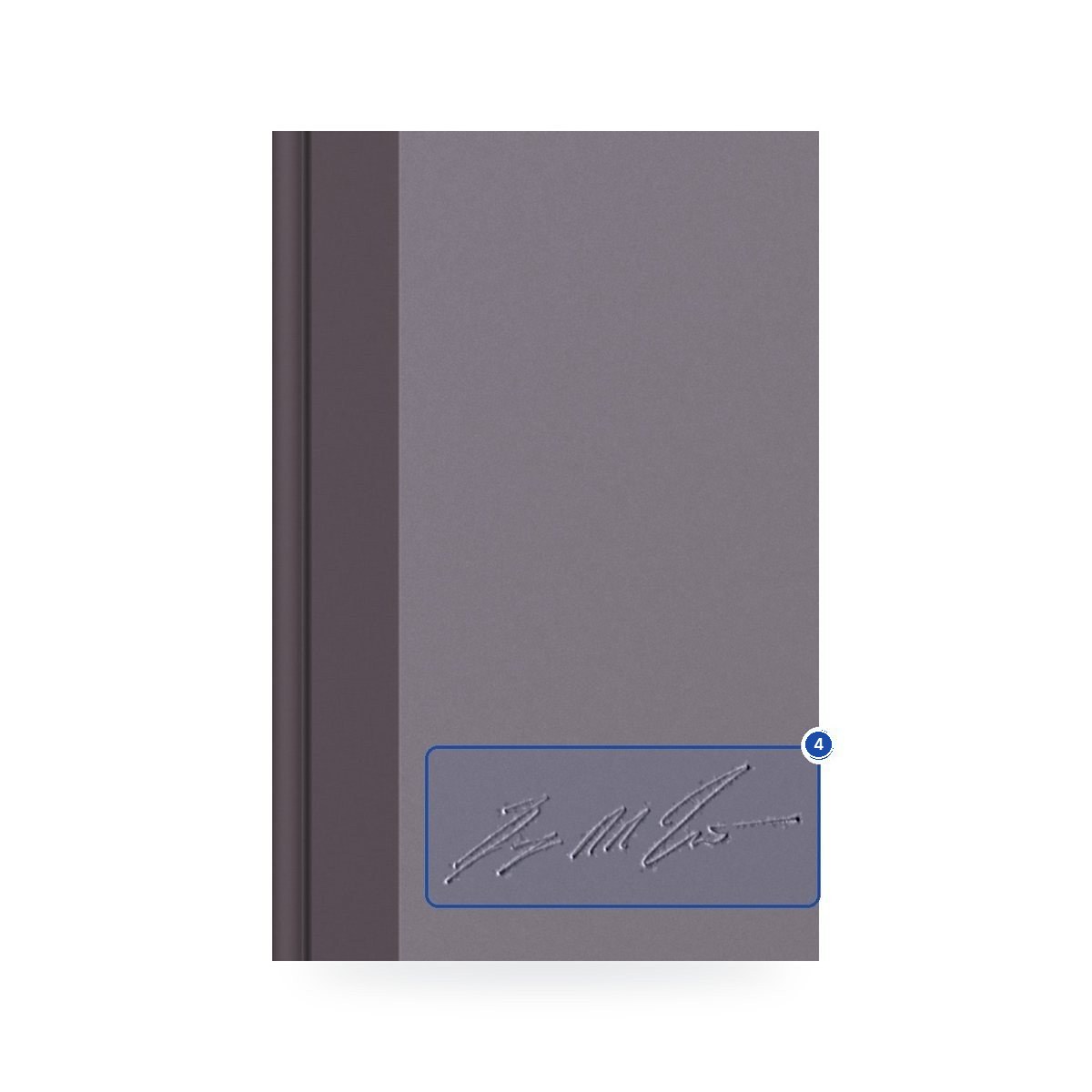
Tilt the page toward the light. A real signature is ink on the surface of the paper: the line is darker where the pen pressed harder, thins out on fast strokes and can skip where the pen ran dry. A facsimile signature is part of the printing: the same flat, even line as the type around it, with no pressure and no skips, or pressed into the board with no ink at all. Under a loupe, a printed facsimile often shows the dots or the crisp edge of the printed type; pen ink soaks a little into the paper fibres.
2. Where is the signature?
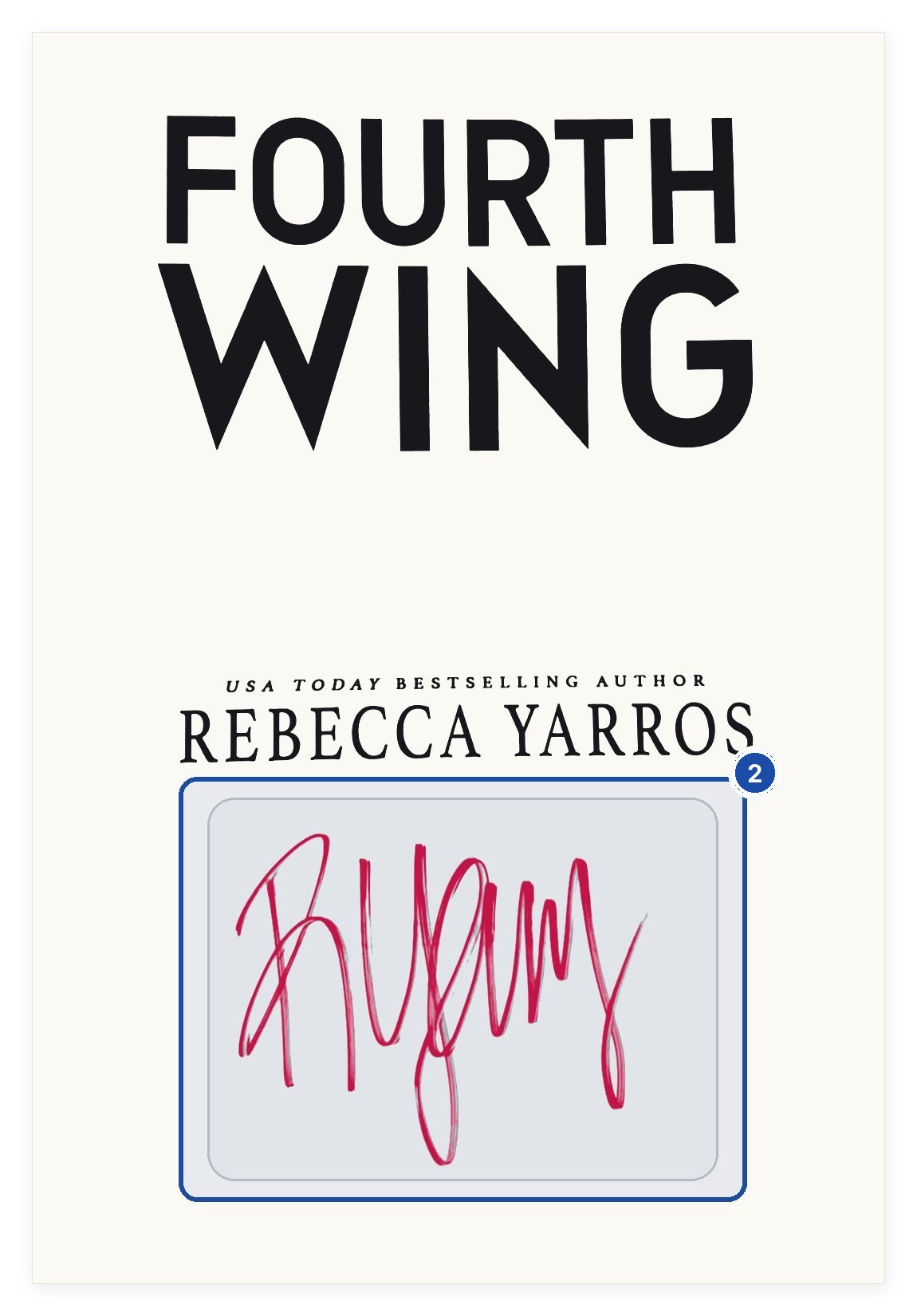
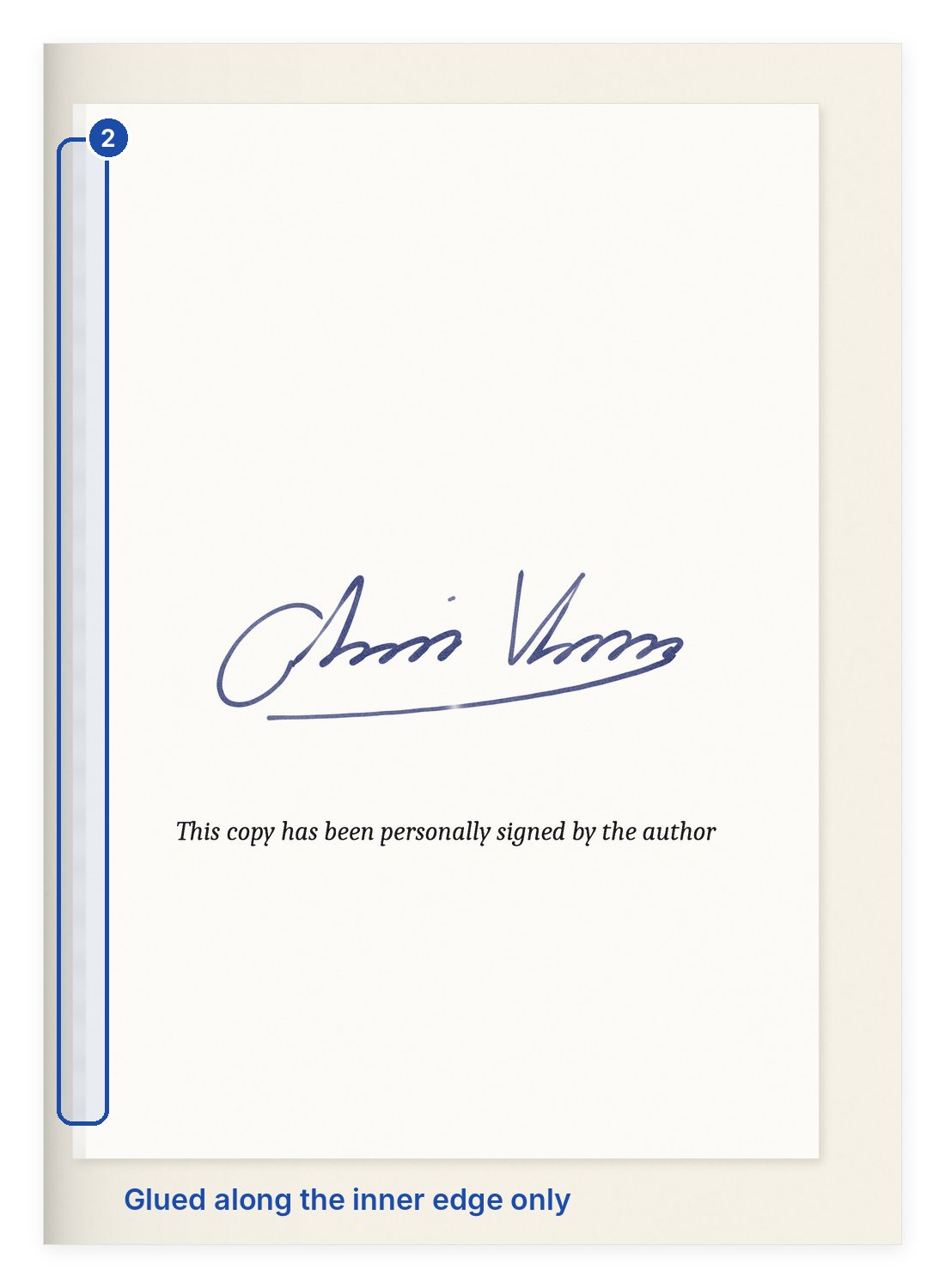
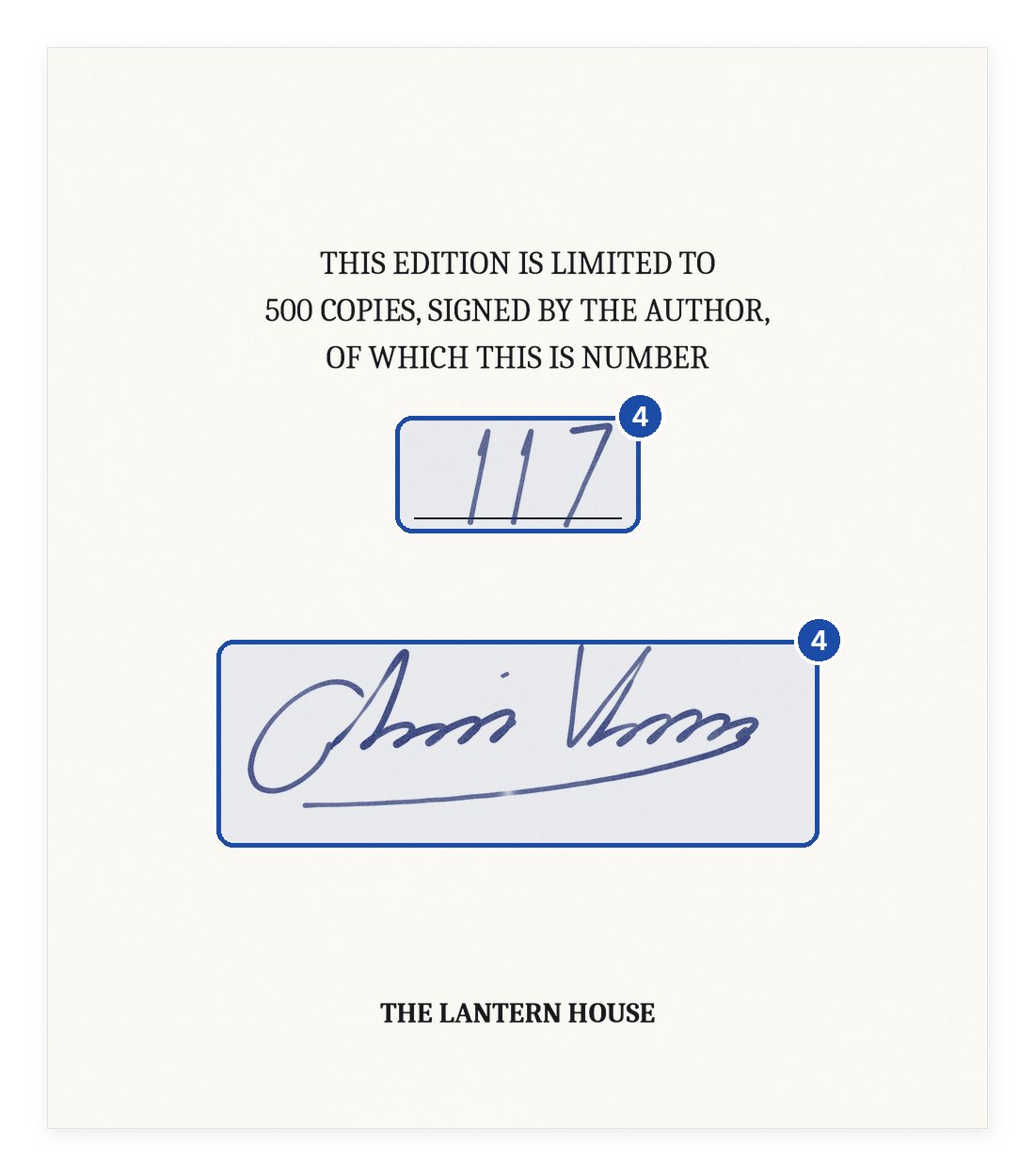
Authors usually sign the title page or the half-title. A signed bookplate is a label, often clear or printed with the author’s name, signed by the author and stuck in later, usually on the front pastedown or the title page, like the one in our Fourth Wing below. A tipped-in sheet is a separate leaf the author signed before binding, glued in at the inner edge, which is how many publisher “signed editions” are made. All three can be genuine signatures; they are worth different amounts (see below), so a listing should say which it is.
3. Just a name, or a message? Signed vs inscribed
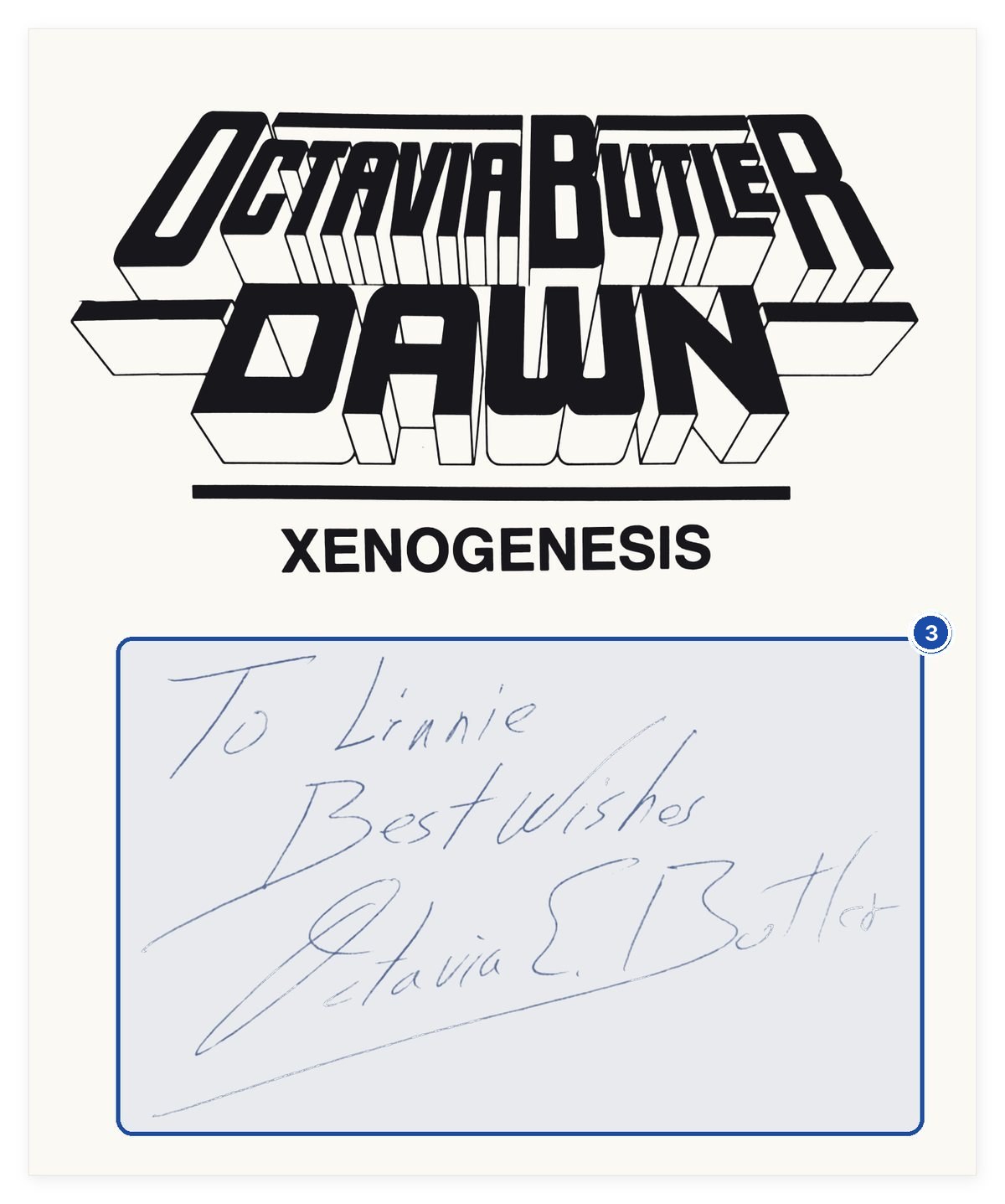
A signed copy has the author’s name alone, sometimes with a date or a place. An inscribed copy adds a message to someone: “To Linnie, Best Wishes” above Octavia E. Butler’s signature in Dawn. An inscription to a stranger is usually valued about the same as a plain signature or a little below it, because a collector would rather not have someone else’s name in the book. An inscription to someone notable (another writer, the editor, a friend named in the dedication) is an association copy, often worth much more.
4. Is it on every copy?
Compare with another copy, or with the photos on the book’s edition page. If every copy has the same signature in the same place, it is a facsimile: A Game of Thrones (Bantam, 1996) has George R.R. Martin’s signature blind-stamped into the front board of every first printing. That makes it a point of the first printing, not an autograph. Publishers’ signed limited editions are the other way round: every copy is signed, by hand, and the limitation page says how many were signed and which number this copy is.
5. Can you trust it?
A signature is only as good as its story. The best evidence is provenance: a signing event, a bookseller who had the author sign stock, a photo, a letter. Then compare it with known examples from the same years: authors’ signatures change over a career. Red flags: a signature in a book published after the author died; loops and pressure identical to another copy (an autopen or a stamp); a signature that is too slow and careful, with blunt starts and ends; and a seller who can’t say where it came from. A certificate of authenticity is only worth as much as whoever issued it.
What is a facsimile signature?
A facsimile signature is a reproduction of a signature, printed, stamped or pressed into the book, so every copy has it. In books it turns up on title pages and frontispieces, on the front board (A Game of Thrones), in “signed” anniversary editions and on publisher’s promotional sheets. Outside books the same words mean a printed or stamped signature on a cheque or a contract, which is why most results for the term are about law and fax.
Is a facsimile signature worth anything? Not as an autograph. It can matter as a point of issue: if the first printing has it and later ones don’t, a copy without it is not the first printing.
What is a signed bookplate?
A bookplate is a label stuck inside the front of a book. A signed bookplate is one the author has signed, usually in bulk for a bookshop or a publisher, and that the shop then sticks into copies. The signature is real, but it was not signed in the book, so collectors value it below a signature on the title page. A loose bookplate that was never stuck in is worth less again, because it could go into any copy.
What a signature adds to a book’s value
On the books BBourse values, a signed copy is typically worth several times an unsigned one (often 3 to 20 times, more for authors who rarely signed). A signed bookplate is usually worth about half a signed copy. An inscription to a stranger is worth about the same as a plain signature, or a little below it; an inscription to someone notable can be worth more.
Every edition page on BBourse shows its value unsigned and signed, by condition. Search your book to see both.
Signed, inscribed, bookplate or facsimile? At a glance
| Autograph | Not an autograph | |
|---|---|---|
| The line | Ink on the surface, pressure varies, can skip | Flat, even, printed or pressed |
| Where | Title page or half-title; a bookplate or a tipped-in sheet | Anywhere, often the board or a printed page |
| Every copy? | Unique to this copy (or a numbered limited edition) | The same on every copy |
| Message | Name only = signed; a message to someone = inscribed | None |
A signature on the page beats a bookplate or a tipped-in sheet; an inscription to someone notable can beat both.
Common questions
- Is a facsimile signature worth anything?
- Not as an autograph: every copy has it. On some books it is a point of the first printing (A Game of Thrones), so it matters for identifying the edition, not as a signature.
- Is a signed bookplate worth less than a signed book?
- Yes. The signature is real but wasn’t signed in the book, so collectors usually value a signed bookplate at about half a signature on the title page. A loose bookplate is worth less again.
- Is an inscribed book worth less than a signed one?
- Usually about the same or a little less, if the inscription is to someone unknown. An inscription to a notable person (an association copy) is often worth more.
- What is an autopen signature?
- A signature drawn by a machine that copies a template with a real pen, so it looks like ink. Autopen signatures repeat exactly: the same loops and the same length on every copy. They are not autographs.
- Do I need a certificate of authenticity?
- Not for most signed books. Provenance (where and when it was signed) and comparison with known examples count for more. A certificate is only worth as much as whoever issued it.
- What is a signed limited edition?
- A small run the publisher had the author sign, usually on a limitation page or a tipped-in sheet, numbered (“This is copy 214 of 500”). Every copy is signed by hand, so the signature is real even though every copy has one.
Guides and editions mentioned
- How to tell if a book is a first edition: the seven checks, signatures among them
- How to identify a first edition of A Game of Thrones: the blind-stamped facsimile signature
- The Fall of Hyperion, first printing
- Dawn, first printing
- Fourth Wing, first printing
The signed title page, bookplate, inscription and stamped board are recreated from photographs of real copies in the BBourse collection: handwriting and printed type are taken from the photos exactly; lighting, glare and wear are removed so the points read clearly. The printed facsimile, the tipped-in sheet and the limitation page are generic illustrations, with an invented title and signature, drawn after the way these pages look in real books.
Have a first printing? Send a few photos and get a firm offer in 2–3 days. Get an offer.